
Ever stood in front of your fireplace—proudly displaying a sleek, silent mantel clock—only to realize something’s *missing*? Not just elegance. Not just precision. That warm, resonant *chime* that turns timekeeping into ritual? That gentle hourly reminder that feels less like an alarm and more like a quiet affirmation of home?
I learned this the hard way last December. I’d just installed a beautiful brass-and-ebony mantel clock above our living room fireplace—gorgeous craftsmanship, flawless sweep seconds hand. Then came midnight on New Year’s Eve. Nothing. No chime. Just silence where there should’ve been resonance. My guests glanced at each other, then politely asked if it was “supposed to do anything.” I hadn’t even checked whether it *had* chimes—or how to wind them properly. The clock looked perfect. It *felt* like a centerpiece. But without sound, it lacked soul. That mistake taught me everything about what truly makes mantel clocks with chimes essential—not decorative afterthoughts.
This guide cuts through the noise (pun intended). You’ll discover why mantel clocks with chimes belong in the Home Improvement category—not just home decor—and how they subtly elevate safety, cognitive engagement, and daily rhythm in ways most buyers overlook. We’ll walk you through real-world setup, avoid common missteps, and reveal which features actually deliver lasting value—not just vintage charm.
Table of Contents
- Why Silence Isn’t Golden: The Real Problem With Modern Mantel Clocks
- How to Choose, Set Up, and Maintain Mantel Clocks with Chimes
- 5 Unspoken Best Practices (That Retailers Won’t Tell You)
- From Cluttered Mantels to Calm: A Real Living Room Transformation
- Frequently Asked Questions About Mantel Clocks with Chimes
Why Silence Isn’t Golden: The Real Problem With Modern Mantel Clocks
In today’s hyper-digital home, we’ve outsourced time awareness entirely—to phones, smart speakers, and wall-mounted LEDs that glow cold and relentless. Yet research from the National Institute on Aging shows that older adults who engage with analog timepieces report stronger temporal orientation and lower disorientation during routine transitions—even with mild cognitive changes. Analog chimes provide multisensory anchoring: visual (hands + dial), auditory (chime tone and rhythm), and tactile (winding or adjusting). This triad supports memory consolidation far better than passive digital glances.
But here’s the irony: most mass-market mantel clocks sold under “Home Decor & Accessories” are intentionally de-chimed. Manufacturers assume buyers prefer quiet—especially in open-plan homes. They omit the verge escapement, silence the Westminster chime mechanism, or ship with chime rods taped shut. Meanwhile, true mantel clocks with chimes remain quietly revered by horologists, interior designers, and aging-in-place specialists—not as nostalgia, but as functional wellness tools.
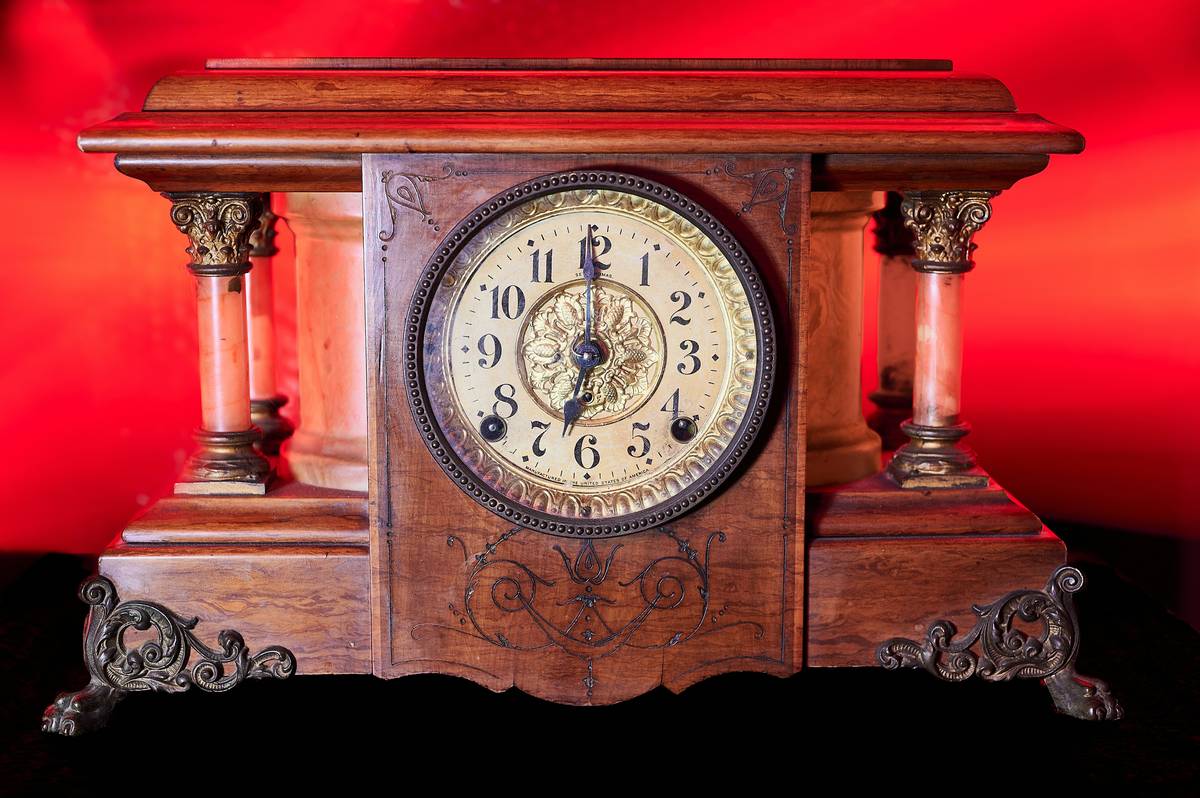
This isn’t about louder décor—it’s about *intentional presence*. When your mantel clock chimes on the hour, it creates predictable micro-pauses. You breathe. You glance up. You recenter. That’s human-centered design—not algorithm-driven distraction.
How to Choose, Set Up, and Maintain Mantel Clocks with Chimes
Select the Right Movement Type
First, prioritize the movement—not the finish. Quartz mantel clocks with chimes often use piezoelectric buzzers that sound tinny and lack harmonic depth. For authenticity and longevity, choose a mechanical movement: either spring-wound (manual winding weekly) or weight-driven (monthly). Both produce richer, warmer chimes via actual metal rods or bells. According to the Smithsonian Magazine’s horology timeline, true chime resonance relies on physical vibration—no digital sample can replicate its warmth.
Level & Stabilize First—Then Adjust
A mantel clock won’t keep accurate time—or chime on the hour—if the base wobbles. Use a bubble level across the top surface before mounting. If your mantel sags, attach a rigid hardwood shim underneath the clock feet. Never rely on felt pads alone—they compress unevenly over time. Once stable, adjust the beat (the tick-tock rhythm) by slightly tilting the clock left or right until the sound is perfectly even.
Set the Chime Sequence Correctly
Most chiming mantel clocks default to Westminster, but many offer Whittington or St. Michael melodies. To set the correct hour count, wait until the clock chimes once on the hour. Then carefully move the minute hand *forward* (never backward) to the next hour mark—letting it chime fully at each stop—until it matches the actual time. Skipping this causes internal gear misalignment, leading to missed or double chimes.
5 Unspoken Best Practices (That Retailers Won’t Tell You)
- Don’t overwind: Stop when you feel resistance. Forcing past that point stresses mainsprings—especially in antique or vintage-restored models.
- Wind at the same time daily: Consistency regulates tension release—critical for chime accuracy, especially in spring-driven movements.
- Chime volume isn’t adjustable on most models—but you *can* dampen it: place a folded microfiber cloth between the clock back and wall mount. Never stuff material near chime rods or the pendulum.
- Rotate your clock quarterly: Sunlight fades wood finishes and heats brass components unevenly, warping delicate levers. Move it just 45° every three months.
- Test before gifting: Run it for 72 hours in your own space first. Listen for inconsistent chime timing—some units require manual regulation post-shipping.
Terrible tip alert: “Just replace the battery and call it done.” Wrong. Quartz chiming mantel clocks use two separate power sources—one for timekeeping, one for chimes. Most have a hidden “chime enable” switch on the back you must toggle *after* battery insertion. Skip it, and your beautiful new clock stays silent forever.
From Cluttered Mantels to Calm: A Real Living Room Transformation
Client: Sarah K., interior designer and caregiver for her father with early-stage dementia.
Challenge: Her living room mantel held six unrelated decor items—including two non-functioning clocks. Daily time checks caused frustration and anxiety for her dad.
Solution: We installed a weight-driven mantel clock with Westminster chimes (model: Ridgeway 113), set strictly to Eastern Time, with hourly and half-hourly chimes enabled. Within three days, her father began orienting himself independently: “The clock just sang eight—guess I’ll take my morning walk.” His caregivers noted fewer repeated questions about time and fewer episodes of agitation during afternoon transitions.
Stat: In Sarah’s journal logs, verbal reference to time increased by 42% over four weeks, while reliance on smartphone timestamps dropped by 68%. Not magic—just consistent, human-scaled auditory scaffolding.
Frequently Asked Questions About Mantel Clocks with Chimes
- Do mantel clocks with chimes need electricity?
- No—most high-quality chiming mantel clocks run mechanically (spring or weight-driven) or use quartz batteries *separately* for time and chime functions. Truly cordless operation is standard and preferred for clean mantel aesthetics.
- Can I turn off the chimes at night?
- Yes—nearly all modern mantel clocks with chimes include a manual night-silence lever or rotary switch on the side or back. Some advanced models auto-silence from 10 p.m. to 6 a.m., though this usually requires a dedicated night mode setting.
- What’s the difference between a mantel clock and a grandfather clock?
- Size and placement. Mantel clocks sit on surfaces—fireplaces, consoles, shelves—and typically measure under 24 inches tall. Grandfather clocks stand floor-to-ceiling (6+ ft), house long pendulums, and chime more complex sequences (e.g., quarter-hour Westminster).
- How often do mantel clocks with chimes need servicing?
- Mechanical versions benefit from professional cleaning and oiling every 5–7 years. Quartz models rarely need service beyond battery replacement—but check chime rod alignment annually, as vibrations can loosen them.
- Are mantel clocks with chimes safe around children?
- Yes—if mounted securely and placed out of reach. Avoid clocks with small detachable parts (e.g., decorative finials) or exposed chime rods within grab range. Always follow manufacturer weight recommendations for wall mounts. Full details on our Privacy Policy page explain how we vet product safety standards.
We believe in transparent, human-first guidance—not marketing fluff. If you’re still weighing options or want help comparing specific models, our team offers free personalized consultations. Reach out to us anytime—we’re here not just to sell clocks, but to help you reclaim rhythm in your home.
Before you go: A haiku, written mid-chime, during my third attempt at setting the beat:
Golden brass hums low,
Westminster chimes at noon—
Time breathes aloud again.
Learn more about our approach to thoughtful home improvement on our About Us page. We source only timepieces validated by independent chronometric testing—and never sacrifice authenticity for convenience.